The Hidden Anchor: Navigating Emotional Gaps for Career Growth

You've mastered the technical skills. Your resume is flawless. Your experience is solid. Yet something invisible keeps holding you back from the leadership role, the promotion, the recognition you know you've earned.
That invisible force? Emotional gaps.
These aren't weaknesses you can see on a performance review or measure in a quarterly report. They're the subtle ways you disconnect from yourself and others: feeling chronically undervalued, struggling to read the room during high-stakes meetings, or watching opportunities go to people with half your expertise but twice your ability to navigate relationships.
Most executives and entrepreneurs spend years working on what they can see: certifications, metrics, deliverables. Meanwhile, the real barrier to their next level sits hidden beneath the surface: unidentified, unaddressed, and quietly sabotaging their trajectory.

The Invisible Performance Killer
Emotional gaps are the deficiencies in how you understand, manage, and leverage emotions: both your own and others'. They show up as:
- Feeling perpetually disconnected from your team, even when you're leading them
- Reacting defensively to feedback instead of extracting its strategic value
- Missing the unspoken dynamics that determine who gets trusted with bigger responsibilities
- Burning out because you haven't learned to regulate stress or recognize your own limits
- Watching less experienced colleagues get promoted because they "just get people"
The data confirms what high performers already suspect. Emotional intelligence drives 58% of job performance across all roles. People with developed EQ outperform their peers 90% of the time, regardless of industry. Yet most professionals receive zero training in closing these gaps.
Your technical mastery gets you in the door. Emotional intelligence determines how far you go once you're inside.
Why Smart People Ignore Their Emotional Gaps
The highest achievers are often the most blind to their emotional limitations. You've succeeded despite them: why fix what hasn't completely broken you yet?
Because the rules changed. The career game you mastered in your 20s and 30s doesn't work at the executive level. Individual contribution matters less. Your ability to inspire trust, navigate conflict, and make people want to follow your vision matters exponentially more.
Emotional gaps that you could work around as a mid-level professional become career anchors at the top. The strategy that got you here won't get you there.
Organizations now rely on cross-functional collaboration, distributed leadership, and the kind of influence that can't be mandated by title alone. The professionals who master emotional intelligence aren't just getting promoted: they're becoming the people everyone wants to work with, the names that come up when executives discuss succession planning.

Identifying Your Specific Emotional Gaps
Self-awareness is the entry point to all emotional development. Without it, you're trying to navigate in the dark.
Start by examining where you feel the most friction:
In conflict:
Do you avoid difficult conversations until they explode? Escalate too quickly? Struggle to understand why someone is upset when you've only stated facts?
Under pressure:
Does stress make you shut down, lash out, or make decisions you later regret? Can you maintain clarity when everything feels urgent?
In relationships:
Do colleagues describe you as intimidating, distant, or hard to read? Do you struggle to build alliances outside your immediate team?
With feedback:
Does criticism feel like an attack? Do you intellectually accept feedback but emotionally reject it? Can you extract value from even poorly delivered input?
During change:
Do transitions throw you off balance? Does uncertainty trigger anxiety that others can sense? Can you help your team adapt or do you amplify their resistance?
Your emotional gaps live in the pattern of where you consistently struggle, not in isolated incidents. Map the territory. Name what's actually happening instead of what you wish were happening.
The executives who accelerate fastest aren't the ones without emotional gaps: they're the ones who can identify their gaps with brutal honesty and address them systematically.

The Gap Strategy: Turning Invisible Barriers Into Accelerators
Once you've identified your emotional gaps, you can transform them from anchors into advantages. The professionals who develop emotional intelligence don't just catch up: they leapfrog peers who remain blind to these dynamics.
Build self-regulation as a strategic asset:
Emotional resilience isn't about suppressing feelings or pretending everything is fine. It's about creating space between stimulus and response. When you can maintain composure during chaos, you become the person others turn to when stakes are high. Practice recognizing your emotional patterns before they control your decisions. Name what you're feeling without being controlled by it.
Develop empathy as a navigation system:
Understanding what others feel and need gives you information most people miss. You can predict resistance before it surfaces. You can tailor your communication to land with each stakeholder. You can build coalitions because you understand what motivates different players. Empathy isn't weakness: it's intelligence gathering that happens through emotional channels.
Master communication across emotional contexts:
The best technical argument loses to a mediocre emotional connection every time. Learn to read the room, adjust your delivery based on what people need to hear (not just what you need to say), and recognize that logic alone rarely changes minds. People remember how you made them feel long after they forget what you said.

Practical Application: Closing Gaps in Real Time
Theory means nothing without execution. Apply your developing emotional intelligence immediately:
In your next difficult conversation:
Before you speak, pause. What emotion are you feeling? What emotion is the other person likely feeling? What outcome do you want? Now choose words that account for all three.
When conflict surfaces:
Resist your default pattern. If you typically avoid, engage directly. If you usually escalate, slow down. Ask questions that help you understand the other perspective before defending your own.
During your next high-pressure decision:
Notice your stress signals. Are you rushing to relieve anxiety? Delaying because you're overwhelmed? Making the decision from strategy or from emotion? Create the space to separate the two.
With your team:
Ask one direct question about how they're experiencing a situation. Listen to the answer without fixing, defending, or redirecting. Just gather the information. Watch what changes when people feel heard.
After receiving feedback:
Sit with it for 24 hours before responding. Let the defensive reaction pass. Then extract what's useful, even if the delivery was clumsy. Especially if the delivery was clumsy: that's where you learn most about how others perceive you.
From Gap to Growth
The moment you identify an emotional gap, it loses half its power over you. You can't fix what you can't see. Once you see it, you can systematically address it.
Emotional intelligence isn't a fixed trait. It's a learnable skill that responds to deliberate practice. The executives who treat it as such don't just advance: they create careers that feel sustainable, relationships that feel genuine, and influence that compounds over time.
Your technical expertise created your current success. Your emotional intelligence will determine your next level.
Stop treating emotional gaps as soft skills or nice-to-haves. Start treating them as the strategic advantage they are: the difference between being competent and being chosen, between achieving your goals and exceeding what you thought possible.
The hidden anchor only stays hidden until you identify it. Once you see it clearly, you can cut the line and accelerate.
Related Articles
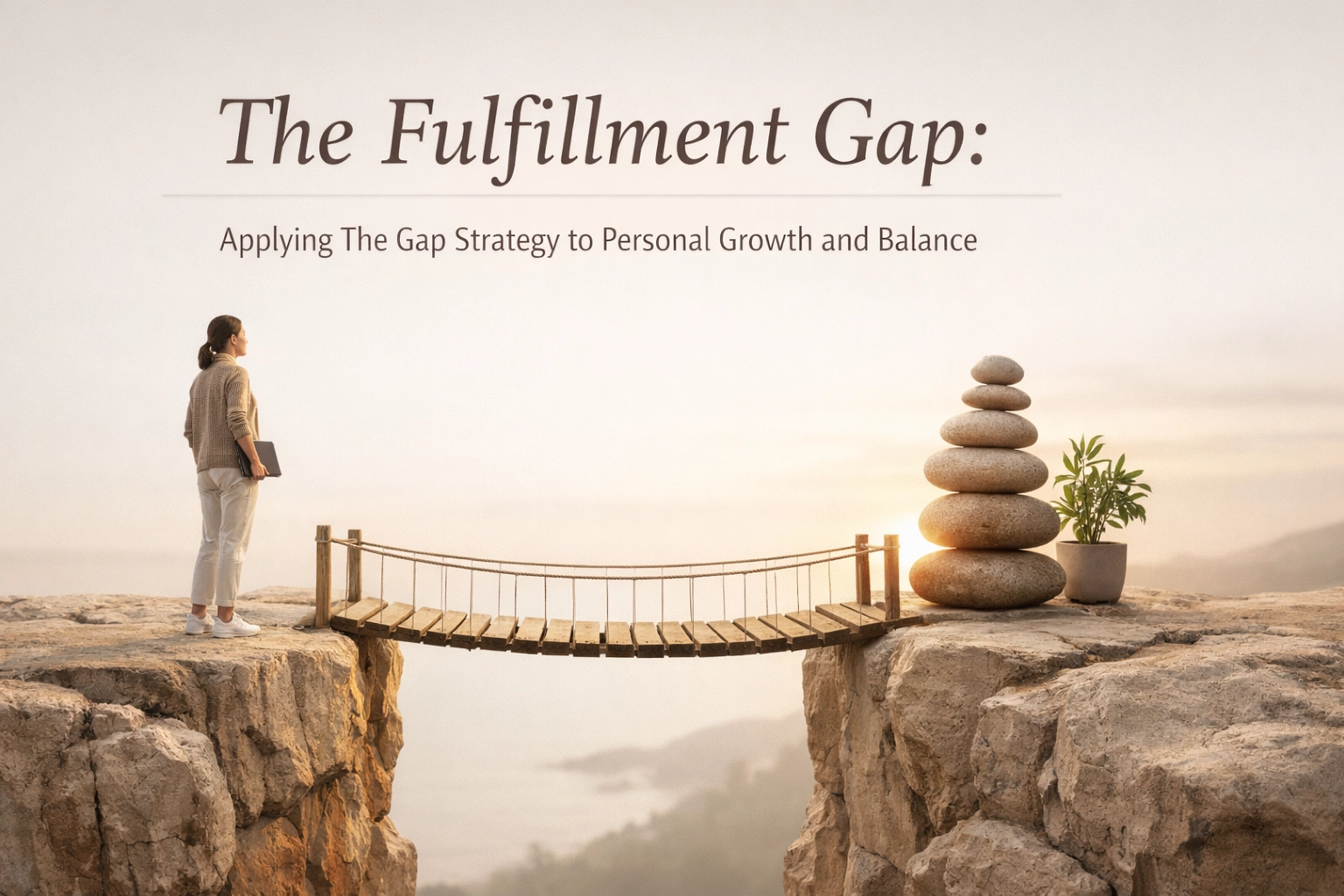
The Fulfillment Gap: Applying The Gap Strategy to Personal Growth and Balance
That hollow feeling isn't burnout. It's not imposter syndrome. It's the Fulfillment Gap — the distance between who you've become in pursuit of success and who you actually want to be. Learn how to apply The Gap Strategy framework to close it.

The Emotional Gap: Your Hidden Leadership Advantage
Most managers miss it. They're busy optimizing processes while their teams quietly disengage. The answer? They're filling the wrong gaps. Discover why the Emotional Gap is your hidden leadership advantage.

Skills Gap Analysis: The Fastest Way to Prove Your Worth When AI Does the First Draft
AI just commoditized your output. The report you'd spend three hours writing? ChatGPT drafts it in 90 seconds. If your value is tied to producing the first draft, you're already replaceable.